Skill Tracer953 skills / 17 collections

Read how professionals write agent skills.

Collections 17

SuperpowersJesse Vincent15 skills

Superpowers is a software development method for coding agents. It is a set of composable skills (brainstorming, planning, TDD, debugging, subagent execution, code review, branch finishing) plus a bootstrap skill that makes the agent check for and use them before acting. It is for developers who run agents in Claude Code, Codex, Cursor, Gemini and other harnesses.

Why read it

  • The writing-skills skill shows how to test a skill the way you test code: run a pressure scenario without the skill, record the agent's rationalizations word for word, then write guidance against them, and micro-test the wording against a no-guidance control.
  • The execution skills show how to keep a long autonomous run on track and recoverable: a ledger file that survives compaction, helper scripts for task briefs and review packages, and a short, fixed list of conditions that allow stopping.
Skills For Real EngineersMatt Pocock39 skills

This is Matt Pocock's set of skills for coding agents, built for engineers who want to do "real engineering - not vibe coding". It covers interviewing the user before work starts, writing specs and tickets, test-driven development, debugging, code review and codebase design. It also has productivity skills for handoffs, teaching and writing documents for agents.

Why read it

  • It shows how to split skills into user-invoked ones that run a process and model-invoked ones that hold reusable rules, so a wrapper like grill-with-docs can be one line that calls two other skills.
  • The writing-for-agents skill sets out the author's own rules for writing skills (context pointers, progressive disclosure, completion criteria, leading words), and the other files apply those rules.
gstackGarry Tan63 skills

gstack is Garry Tan's set of slash-command skills, written in Markdown. They turn Claude Code and other coding agents into a virtual engineering team that works through a sprint: think, plan, build, review, test, ship and reflect. It is written for founders, first-time Claude Code users and tech leads who want structured roles and review gates in place of a blank prompt.

Why read it

  • The collection shows how to keep a long, multi-step skill manageable. The main file is a decision-tree skeleton, and it tells the agent to read each on-demand section at the step where that section applies, not to work from memory.
  • It shows how to make an agent prove its claims before it reports them. Each finding needs a quoted line, confidence scores decide how findings are displayed, and the rules ban completion claims without fresh verification evidence.
HyperFramesHeyGen9 skills

HyperFrames ships nine agent skills that teach coding agents like Claude Code, Codex and Cursor to make deterministic MP4 videos from HTML with the HyperFrames CLI. One hub skill holds the render contract and the work loop. The others cover the CLI, a block registry, media, Figma, slideshows, porting other tools' work into HyperFrames, rebuilding a video from a file, and making episodes from style templates.

Why read it

  • The collection shows how to write a contract skill: a numbered list of hard rules backed by a CLI checker that prints a `Fix:` line for each violation, with the other skills deferring to it.
  • It shows how to write a verification loop that checks visual work against measured numbers: SSIM diffs against the original, dB thresholds, and checking an ffprobe duration after a render.

What it makes

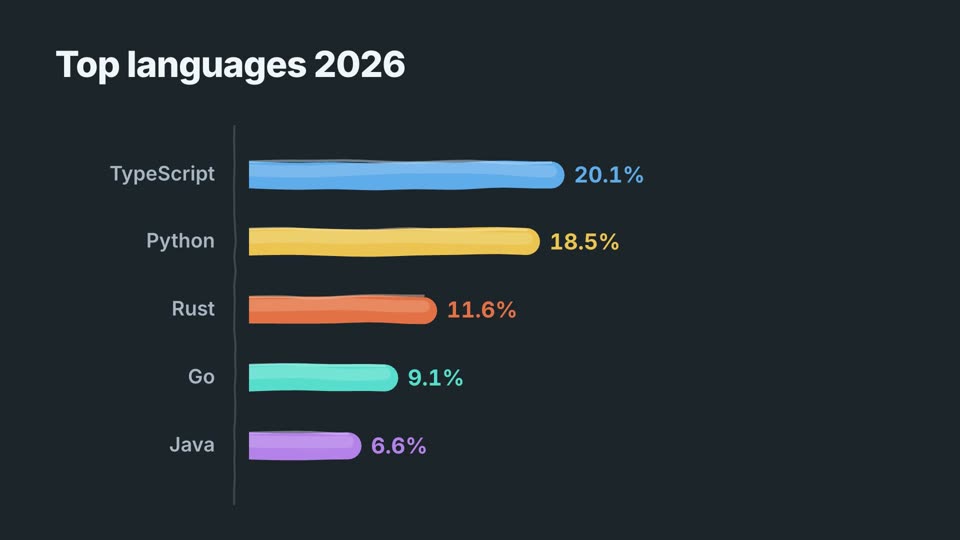
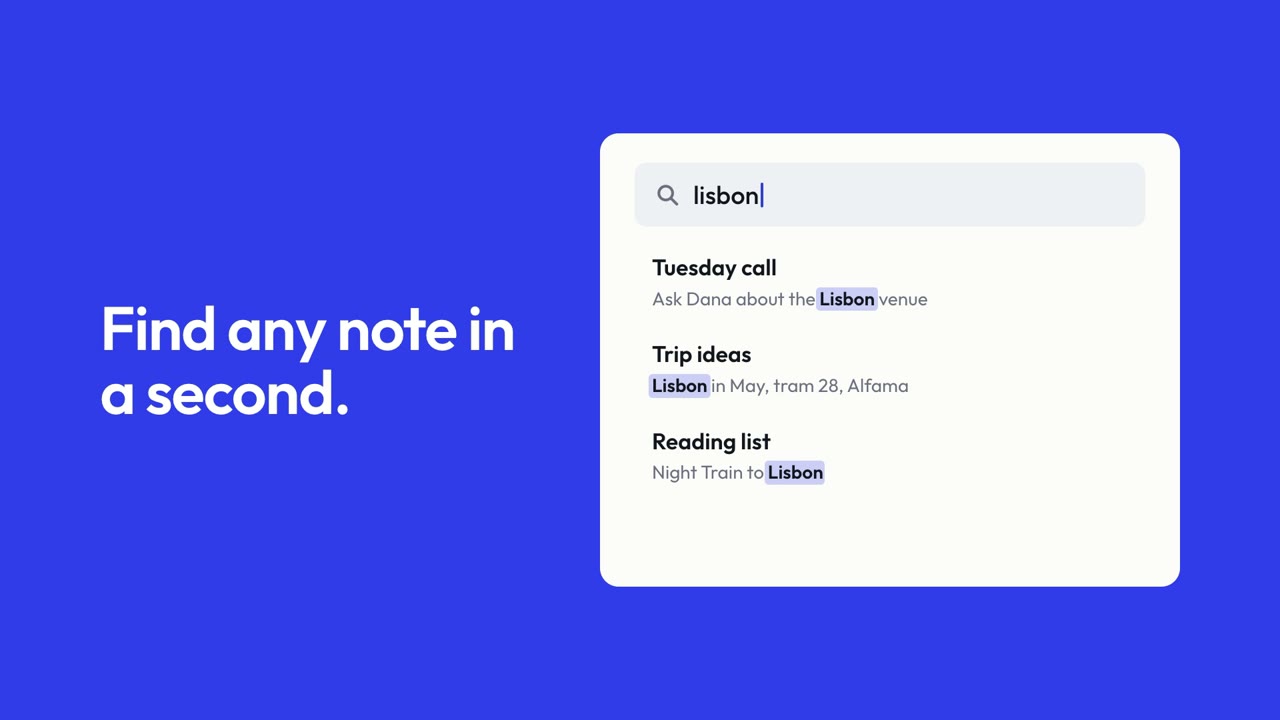
A video frame on a bright blue background: the words "Find any note in a second." beside a search box that finds three notes mentioning Lisbon.A video frame of a hand-drawn bar chart titled Top languages 2026: TypeScript 20.1%, Python 18.5%, Rust 11.6%, Go 9.1%, Java 6.6%.A portrait video frame in a woodblock-print style: a figure holding a phone stands in a field at night beside a stone lantern, under a crescent moon, with the caption "And one night, he wondered: how does it know?"
Archifytt-a1i1 skill

Archify is one skill that has an AI coding agent turn a description, Mermaid source or a code repository into a checked, standalone interactive HTML file. That file holds either one of ten diagram types or a one-page explainer that answers a question. It is meant for people using Claude Code, Codex, Cursor or OpenCode who want to understand, plan or share a system or process.

Why read it

  • It shows how a skill can push all checking into one CLI command (`finalize`) that returns a machine-readable receipt, and then tell the agent to treat that receipt, not its own judgment, as the definition of success.
  • It shows how to keep a large skill short by sending the agent to reference files only when a named trigger applies, and by using a type-router table that maps each case to an exact schema and example path.

What it makes

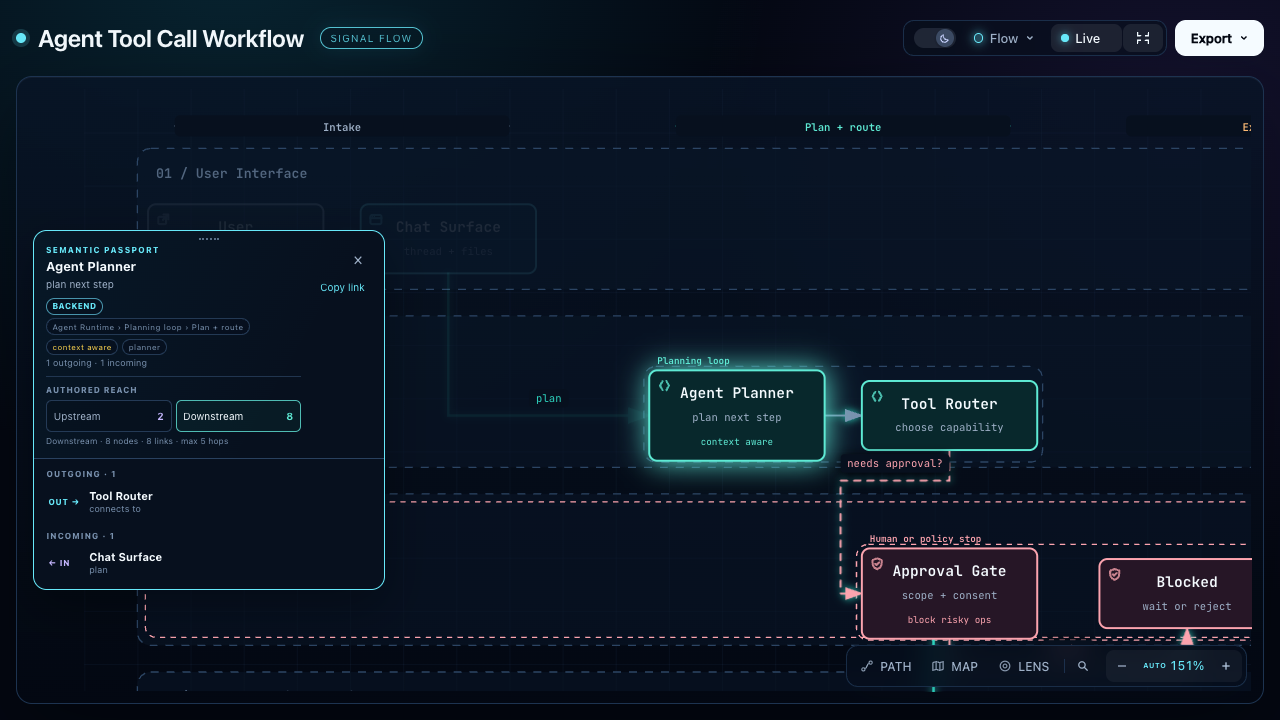
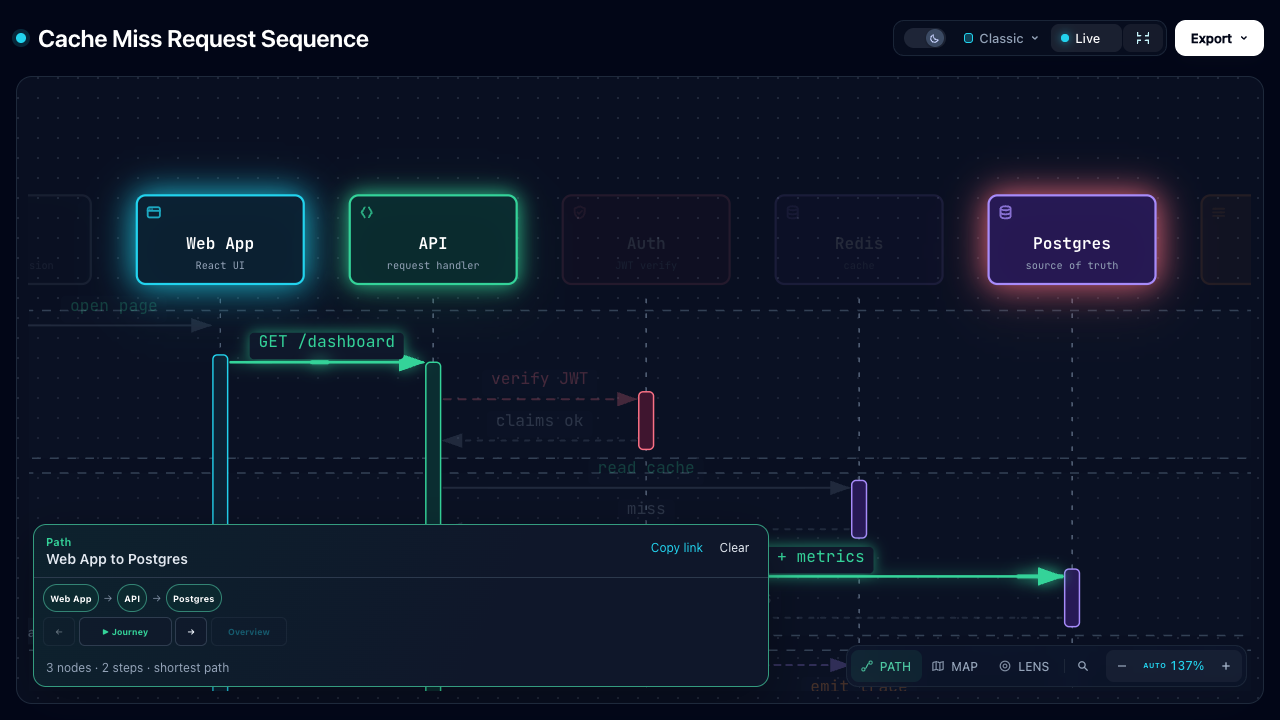
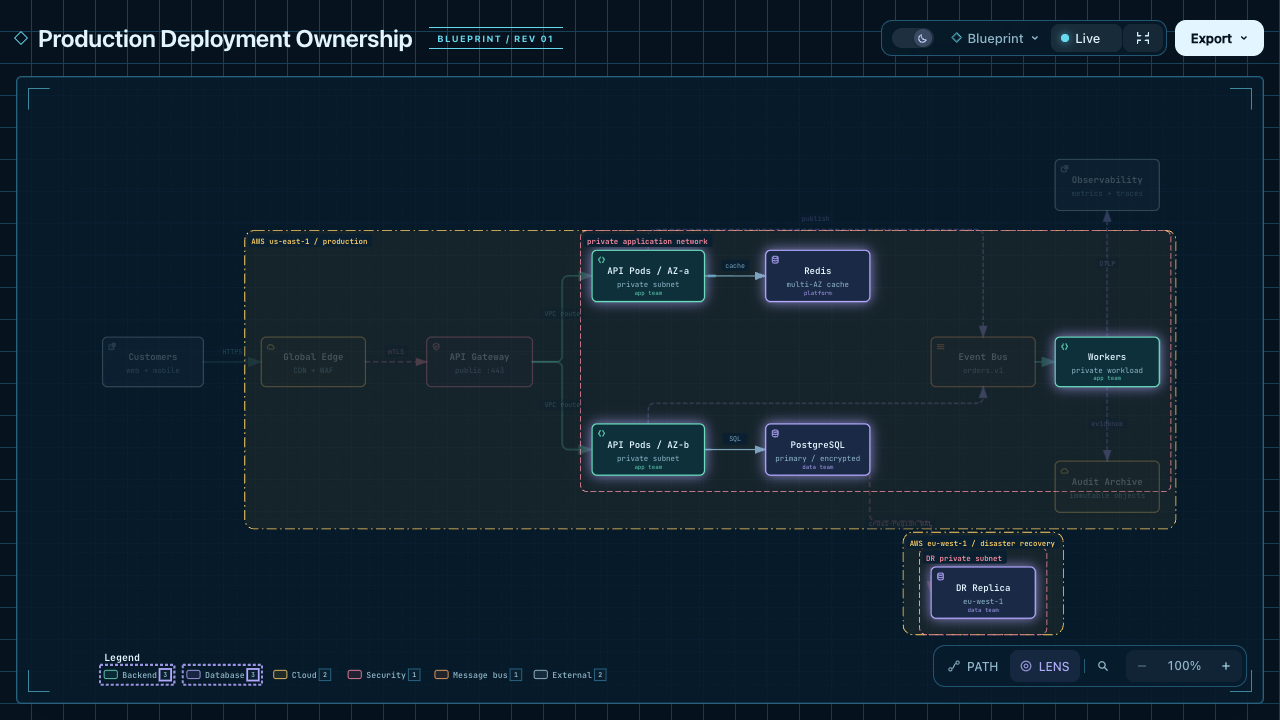
Agent workflow tracing everything the planner drivesCache-miss sequence showing the Web App to Postgres routeProduction architecture comparing backend and database roles
Visual ExplainerNico Bailon1 skill

This collection holds one skill, visual-explainer. It tells an AI coding agent how to turn systems, code changes, plans, data and technical concepts into self-contained HTML pages built around figures. It is meant for developers who want an agent to explain things visually, not in terminal text.

Why read it

  • It shows how to put design taste into short, numbered rules an agent can check, such as "one claim per figure" and "every arrow gets a verb", plus a mapping table from content type to figure type.
  • It shows how to send detail out to reference files, so the main skill file stays a short router that says which reference to read for plans, motion, slides or video.

What it makes

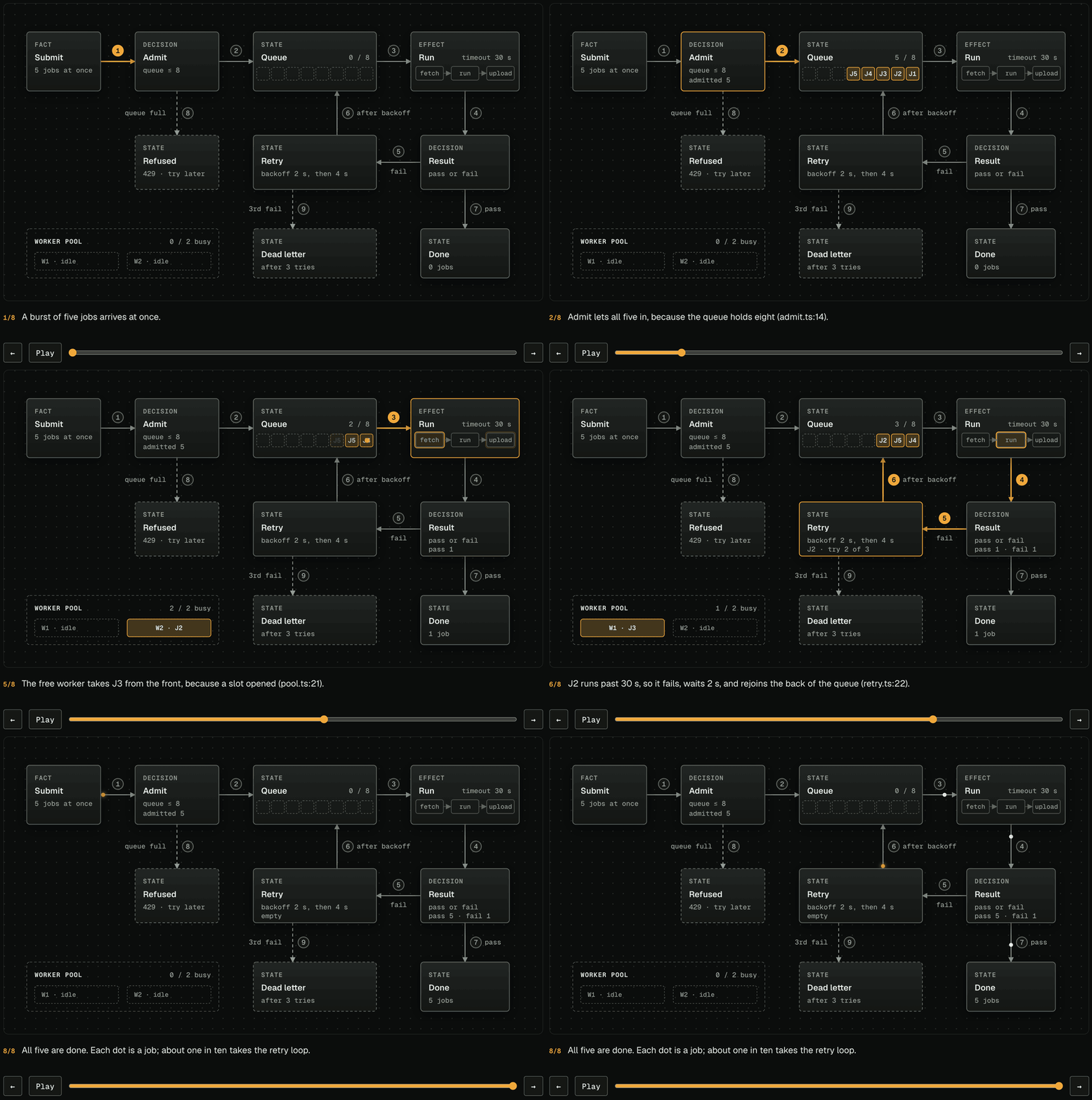
A job queue drawn as a state machine and replayed one event at a time: five jobs pile into the queue, two workers take jobs, a timed-out job lights the retry route back to the end of the queue, the queue drains, then jobs flow through the full picture
AnatomyRyan1 skill

Anatomy is a single skill that has an AI coding agent explain a technical idea by inventing a physical machine whose working is the concept. The agent then builds that machine as a detailed, interactive isometric SVG figure, adding WebGL or 3D where needed. It is for people who want explanatory figures for docs, blog posts or landing pages, and it runs in Claude Code and several other agents.

Why read it

  • It shows how to put one central idea at the top of a skill ("the object is the explanation") and back it with a table of past concept-to-object mappings and the two ways it has failed in practice.
  • It shows how to pair a skill with its own checking tools, an audit script and a line-end check, that must reach zero before the agent may call the work done.

What it makes

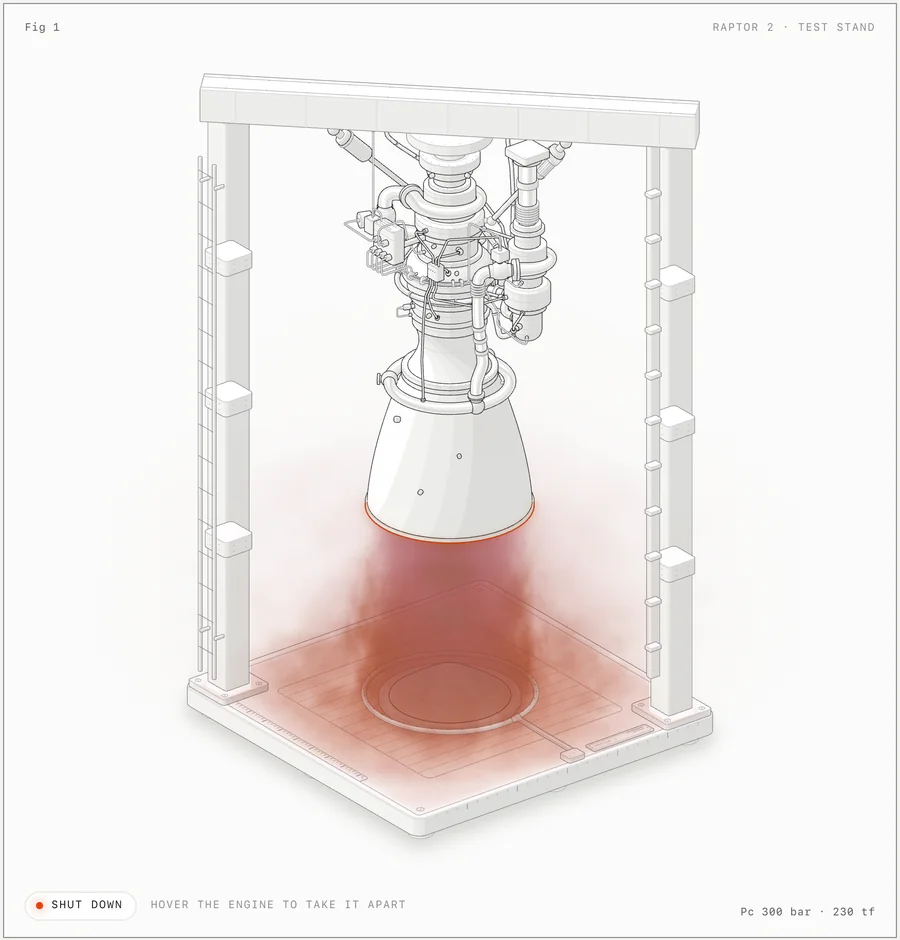
An isometric drawing of a Raptor 2 rocket engine hanging in a test stand, firing: a red exhaust plume, drawn by a WebGL shader, pours onto the stand's base plate. The card reads Fig 1, Raptor 2 test stand, Pc 300 bar, 230 tf.The Raptor 2 engine taken apart in its test stand: its assemblies, pipes and harness hang apart from each other between the posts of the stand.A school ripple tank on four tall legs, with a lamp on an arm above it. Two dippers on a vibrating bar make interfering waves, and their caustics are projected onto the paper screen under the tank.
Canvas DesignAnthropic1 skill

This is a single skill, canvas-design. It tells an AI agent how to make original static visual art, such as posters and art pieces, as .png or .pdf files. The agent first writes a design philosophy as a .md file and then expresses it on a canvas. It is meant for people who want an agent to produce art-quality visual work.

Why read it

  • It shows how to split a creative task into two stages: the agent writes an intermediate document (a manifesto for an art movement), then reads that document back as its brief for making the artwork.
  • It shows how to raise output quality using framing alone: a refinement round where the user is assumed to have already asked for more, and craftsmanship language that the skill deliberately repeats.
BMAD MethodBMad Code, LLC31 skills

BMad Method is a set of skills for agile, AI-driven software delivery. It covers the path from a vague idea through briefs, PRDs, UX, architecture and tickets to built, reviewed code. It is for developers and small teams who use AI coding tools and want the important decisions made explicit and carried forward, not left buried in chat.

Why read it

  • You would learn how to give many skills one shared backbone: the same activation sequence, customization resolver, memlog script and fallback wording repeat across skills, while each skill keeps its own voice and method.
  • You would see how to write facilitation skills that deliberately work against the model's habits, such as doing the thinking for the user, agreeing too readily, or wrapping up too early, by naming each habit and the counter-rule.
Compound EngineeringEvery36 skills

Compound Engineering is a plugin of 36 skills for AI coding agents. It runs a loop of brainstorm, plan, work, simplify, review and compound, and writes each change's lessons where the next run can read them. It is for developers who use Claude Code, Cursor, Codex and other agent hosts.

Why read it

  • It shows how to build skills that call each other: an orchestrator like lfg calls child skills with mode tokens, and each child sends back a structured status that the caller branches on.
  • It shows how to keep a SKILL.md short. The detail lives in reference files, and the skill tells the agent to read each one when it enters that phase and never to rebuild a file's rules from memory.
Evals SkillsShreya Shankar and Hamel Husain9 skills

Eval Skills is a set of nine skills that guide AI coding agents in building evals for a specific product, as opposed to benchmarks for foundation models. It is meant for teams evaluating their own LLM pipelines. An entry skill sends the user to error discovery, audits, judge writing, validation, synthetic data or RAG evaluation.

Why read it

  • You can see how a family of skills hands work between its members: each description says when not to use the skill and names the sibling to use instead, and a small routing skill holds only a table of situations.
  • You can learn how to turn hard-won domain practice into numeric thresholds an agent can check, such as data split sizes, TPR/TNR targets and sample counts, instead of vague advice.
math-proofAnthropic5 skills

math-proof is a Claude Code plugin for hard, research-level mathematics problems, and it has two skills. `solo` has Claude work the problem alone in one long turn. `siege` runs hours of rounds: a judge writes questions, independent workers answer them, and the judge keeps a ledger. Both end in a self-contained proof.md, and both are written for people who want an unattended, auditable attempt at a single problem.

Why read it

  • It shows how to write a long multi-agent protocol that a forgetful orchestrator can still follow. The orchestrator's only memory is state.md, file-based handoffs carry the work between steps, and a script prints one-word verdicts that tell it what to do next.
  • It shows ways to stop the model from overclaiming. These include an append-only claims ledger, two independent verify queries before a proof counts, and a required Status section that says plainly what is and is not proved.
Knowledge Work PluginsAnthropic181 skills

This is Anthropic's open-source set of Knowledge Work Plugins. Each plugin bundles skills, slash commands and tool connectors for one job function, such as sales, finance, legal, data or small business, and it is meant for teams using Claude Cowork or Claude Code.

Why read it

  • You can see how one set of skills is wired together: a router skill sends each request to one skill or chain, chain commands run skills in a fixed order with a gate between steps, and every skill ends by offering a short list of next skills.
  • The skills show how to set out exactly which actions need approval, where reading is free, sending waits for a yes, and text from emails or documents is never treated as an instruction.
Financial ServicesAnthropic59 skills

This is Anthropic's reference set of agents, skills and data connectors for financial-services work: investment banking, equity research, private equity, fund admin and KYC operations. The same files can be installed as a Cowork or Claude Code plugin or deployed as a Managed Agent. It is meant for firms that want Claude to draft analyst work (models, decks, memos, reconciliations) that a qualified professional then reviews and signs off.

Why read it

  • The agent files show how to write safety into a workflow with plain sentences. Untrusted documents go only to reader workers that have no tools, only one subagent can write, and the agent itself never posts, publishes or approves.
  • The modeling skills show how to make long, error-prone builds checkable. They set pause points where the user confirms each stage, and they include checks that prove the output is correct, such as a sensitivity table whose center cell must equal the model's base case.
Scientific Agent SkillsK-Dense AI166 skills

Scientific Agent Skills is K-Dense's library of skills for AI agents doing research work. It covers biology, chemistry, medicine, physics, engineering, Earth science, data analysis and scientific writing. It is for researchers and developers who use agents such as Claude Code, Cursor or Codex for scientific work, and each skill packages guidance for one package, data source or workflow.

Why read it

  • It shows how to say exactly how much of a skill was tested. Each skill states which parts actually ran, which were mocked and which are only illustrative, and it pins the version it was reviewed against.
  • It shows how to set firm limits in high-stakes domains, such as research use only and no diagnosis, while still giving the agent detailed, useful steps.
Marketing SkillsCorey Haines53 skills

This is a library of about fifty marketing skills for AI coding agents. It covers conversion optimization, copywriting, SEO, ads, outbound, pricing and growth, and it is written for technical marketers and founders. Every skill first reads a shared product-marketing context file.

Why read it

  • You can see how a large set of skills shares one foundation: every skill reads the same context file before it asks anything, and each one ends by pointing to related skills.
  • You can learn how to make an agent's writing sound less machine-made. The skills ban AI tells by name, such as "it's not X, it's Y" reveals, and give a three-question gate that every line of copy must pass.
Agency AgentsAgentLand Contributors283 skills

The Agency is a large roster of AI agent personas, sorted into divisions such as engineering, design, marketing, sales, testing and security. Each persona file gives an identity, a mission, rules, deliverable templates and success metrics. It is for people who use Claude Code, Cursor, Gemini CLI and other agent tools, and they can install the files with scripts or a desktop app.

Why read it

  • The files share one section scaffold (Identity & Memory, Core Mission, Critical Rules, Technical Deliverables, Workflow, Success Metrics), so a reader can see how one template carries a role across very different domains.
  • Several agents show how to write guardrails for agents that act on their own, such as idempotency checks before a payment, fail-closed authorization, and retry limits that end in escalation.